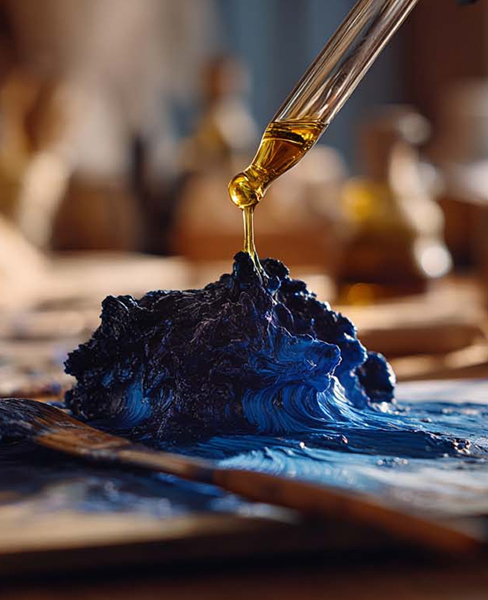
Laissez un message
Si nos produits vous intéressent et que vous souhaitez en savoir plus, veuillez laisser un message ici, nous vous répondrons dans les plus brefs délais.

Poudre de mica pour revêtements de sol et plans de travail en résine époxy
Les surfaces en résine époxy — qu'il s'agisse de sols coulés dans des espaces commerciaux ou de plans de travail moulés dans des cuisines résidentielles — exigent des pigments capables de résister à d'importantes contraintes mécaniques et chimiques tout en conservant une profondeur visuelle. C'est là que les pigments à effets à base de mica prennent tout leur sens. Ils ne sont pas seulement décoratifs ; ils interagissent avec la matrice de résine et modifient directement la diffusion de la lumière à travers la surface durcie, ce qui est l'objectif principal de ce type de finition.
En pratique, les formulateurs travaillant avec des systèmes époxy sont confrontés à un milieu très transparent ou translucide. Contrairement aux peintures opaques, l'époxy laisse passer la lumière avant qu'elle ne soit réfléchie ; par conséquent, le comportement optique du pigment est primordial. Un pigment mal choisi ou présentant une chimie de surface incompatible peut produire des résultats ternes et irréguliers, même avec un dosage correct.
La poudre de mica pour résine époxy se présente principalement sous forme de particules réfléchissantes en forme de plaquettes, en suspension dans une matrice de résine transparente ou teintée. Lors du durcissement de la résine, ces plaquettes ont tendance à s'orienter parallèlement à la surface ; c'est cette orientation qui crée le chatoiement en relief caractéristique des sols et plans de travail en époxy haut de gamme.
La granulométrie choisie influe directement sur le rendu visuel final. Les particules fines (généralement de 10 à 60 µm) produisent un aspect lisse et satiné, idéal pour les plans de travail où la régularité de la surface est primordiale. Les particules plus grossières (100 à 500 µm) offrent un aspect plus brillant et sont souvent utilisées pour les revêtements de sol, où une texture visuelle marquée est recherchée. Aucune n'est intrinsèquement supérieure à l'autre : tout dépend de l'utilisation prévue.
Ce qui rend le mica particulièrement adapté à l'époxy, c'est son inertie chimique. Il ne réagit pas avec les durcisseurs aminés ni avec les résines époxy, ce qui garantit une durée de vie en pot prévisible et évite tout jaunissement dû à des réactions secondaires initiées par les pigments – un problème réel avec certains colorants organiques dans les systèmes bi-composants.
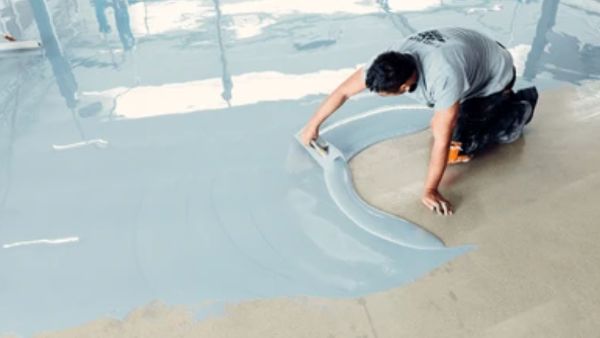
Les pigments nacrés ne se comportent pas tous de la même manière dans l'époxy. La viscosité de la résine, l'épaisseur de la coulée et le type d'application (revêtement de sol autonivelant ou plan de travail lissé à la main) influencent tous le résultat obtenu.
| Série Pigments | Effet visuel | Utilisation typique dans l'époxy |
|---|---|---|
| Série Blanc Argent (KT 100) | Perle blanche pure, lustre neutre | Teintes de fond, comptoirs effet marbre, sols clairs |
| Série Or (KT 300) | tons chauds dorés d'interférence | Comptoirs de luxe, accents décoratifs au sol |
| Série Lustre Métallique (KT 500) | Bronze, cuivre, profondeur métallique | Sols de style industriel, comptoirs originaux |
| Série multicolore (KT 6000) | Interférence à décalage de couleur et à angles multiples | Sols artistiques, surfaces résidentielles haut de gamme |
| Série SynStar (KT 7000) | Base en mica synthétique, haute luminosité, faible teneur en impuretés | Des comptoirs haut de gamme où la blancheur et la clarté sont essentielles. |
| Série bicolore (KT 67000) | Effet de retournement bicolore | Sols décoratifs, surfaces intérieures sur mesure |
| Flocons de mica / Flocons de vinyle | Texture de la puce visible, couverture grand format | sols de diffusion (copeaux dispersés dans de la résine humide) |
Pour obtenir un effet marbre artificiel (une technique courante pour les plans de travail), l'association d'un pigment des séries Silver White ou SynStar avec une petite quantité d'un pigment à interférence de couleur permet d'obtenir un veinage et une profondeur particulièrement convaincants. L'utilisation d'un pigment métallique unique donne généralement un aspect plus plat.
stabilité aux UVLe jaunissement est une préoccupation légitime pour toute surface époxy exposée à la lumière directe ou indirecte du soleil. Le mica lui-même est stable aux UV, mais la matrice de résine ne l'est généralement pas ; la plupart des systèmes époxy standard jaunissent sous l'effet des UV au fil du temps. Ce jaunissement affecte la couleur perçue du pigment, en particulier pour les teintes blanc argenté et froides. Pour les applications extérieures ou en forte luminosité, l'application d'une couche de finition en polyuréthane stable aux UV sur la couche époxy est une pratique courante. Le pigment ne se dégradera pas, mais le support qui l'entoure se dégradera s'il n'est pas protégé.
résistance chimiqueLe comportement du mica est principalement déterminé par la résine, et non par le pigment. Le mica est stable en milieu acide et alcalin dans les plages de pH rencontrées lors d'une utilisation courante sur un plan de travail. Toutefois, les formulateurs doivent savoir qu'une forte concentration de pigment peut légèrement affecter le rapport résine/durcisseur si le pigment absorbe des composants du durcisseur. Ce risque est faible avec le mica inerte, mais il convient d'en tenir compte pour des concentrations supérieures à 5-8 % en poids.
résistance à l'abrasionL'utilisation de résine sur les sols dépend entièrement de la résine et de la couche de finition. Les particules de mica, de forme lamellaire, ne créent pas de concentrations de contraintes comme le font les charges angulaires ; elles sont donc généralement compatibles avec les systèmes de revêtement de sol haute durabilité. Les granulométries plus grossières, utilisées pour les applications par projection, sont scellées sous une couche de finition transparente ; le mica n'est jamais en contact direct avec le passage.
La dispersion est le problème le plus fréquent rencontré par les formulateurs. La poudre de mica pour résine époxy ne nécessite pas d'agents mouillants comme les systèmes à base de solvants, mais un mélange inadéquat peut entraîner une agglomération et une distribution hétérogène, notamment pour les granulométries fines. Il est recommandé de prémélanger le pigment avec la partie A (la résine époxy) manuellement ou à l'aide d'un mélangeur à faible cisaillement avant de l'incorporer à la partie B (le durcisseur). Un mélange à fort cisaillement est à proscrire : il peut altérer la structure lamellaire et réduire le brillant.
Les taux de charge typiques varient de 1 à 5 % en poids pour des effets scintillants subtils, et jusqu'à 10 % pour des finitions métalliques intenses. Au-delà de 10 %, vous risquez de compromettre les propriétés mécaniques de la résine et la transparence de la surface après durcissement. En pratique, la plupart des applications pour sols et plans de travail se situent entre 3 et 6 %.
La maîtrise de la viscosité est essentielle pour la réalisation de sols en béton coulé. Les systèmes à faible viscosité permettent aux plaquettes de mica de s'auto-orienter et de se déposer à plat lors du nivellement, créant ainsi un effet miroir et une profondeur remarquable. Des mélanges plus épais ou une gélification prématurée perturbent ce processus d'orientation et peuvent engendrer un aspect granuleux ou mat difficile à corriger après durcissement.
L'une des limitations réside dans la sensibilité à la température lors de l'application. Les températures ambiantes inférieures à 15 °C ralentissent le durcissement et augmentent la période durant laquelle le mica peut se déposer de manière irrégulière, notamment lors de coulées épaisses. À l'inverse, les températures supérieures à 30 °C accélèrent le durcissement et peuvent ne pas laisser suffisamment de temps pour l'orientation des plaquettes. Travailler dans une plage de 18 à 25 °C permet d'obtenir les résultats les plus prévisibles.
Les formulateurs se demandent parfois si la poudre métallique pour résine époxy — c'est-à-dire les pigments métalliques à base d'aluminium — est préférable aux pigments nacrés à base de mica. La vérité est qu'elles répondent à des besoins esthétiques différents et présentent des avantages et inconvénients pratiques distincts.
| Propriété | Mica nacré | Métal aluminium |
|---|---|---|
| inertie chimique de l'époxy | Haut | Modéré (peut réagir avec les amines durcisseuses) |
| Profondeur visuelle / interférence | Haut — couleur superposée et multi-angles | Faible — réflexion spéculaire à un seul angle |
| Opacité dans la résine transparente | Semi-transparent | Opaque même à faible charge |
| Gamme de couleurs | Large — blanc à travers le changement de couleur | Édition limitée — tons argent, or et bronze |
| Risque de dégagement gazeux / réaction | Aucun | Possible avec des grades non passivés |
Pour la plupart des applications sur sols et plans de travail, les pigments à effet mica sont le choix le plus fiable, notamment dans les systèmes époxy bi-composants. Les pigments métalliques à base d'aluminium nécessitent des grades passivés pour une utilisation en toute sécurité dans les systèmes à durcissement aminé, et même dans ce cas, le résultat visuel est fondamentalement différent : brillant et miroir plutôt que nacré et texturé.
Pourapplications de comptoirLorsque la qualité de finition est primordiale, privilégiez les particules fines (10 à 60 µm) des séries Silver White, Gold ou SynStar. Les micas synthétiques SynStar justifient leur prix plus élevé si la blancheur et la clarté sont essentielles : le mica naturel présente une légère teinte beige ou grise qui peut altérer les tons froids des motifs.
Pourrevêtements de sol décoratifsPour un éclat visible, privilégiez les paillettes de grande taille ou celles de mica de 200 à 500 µm. L'application par pulvérisation assure une couverture maximale et un impact visuel optimal. Un scellage adéquat est indispensable : les particules de mica non protégées sur une surface à fort trafic s'useront et perdront leur effet.
Pourcomptoirs en marbre artificielLa méthode la plus efficace consiste à appliquer une sous-couche de pigment nacré blanc argenté ou blanc cassé, suivie d'une seconde couche composée de pigments à interférence de couleur mélangés en proportions variables sur toute la surface afin de créer des variations naturelles. Tenter d'obtenir un effet marbré en une seule couche donne rarement des résultats convaincants.
Si vous travaillez avecsérie à changement de couleur ou bicolorePour les sols, il faut savoir que l'effet dépend de l'angle de vue : le rendu est très différent selon qu'on les regarde à hauteur d'homme ou depuis une photo prise en contre-plongée. Il est donc conseillé de confirmer les attentes du client au préalable avec un échantillon.
Q : Quelle quantité de poudre de mica dois-je ajouter à la résine époxy pour un projet de revêtement de sol ?
A : La proportion typique est de 3 à 6 % en poids par rapport au système de résine mélangée total. Il est conseillé de commencer à 3 % et d'évaluer l'échantillon avant d'augmenter la proportion. Un pourcentage supérieur à 8-10 % peut affecter le comportement de polymérisation et la dureté de surface, en particulier pour les coulées minces.
Q : Le pigment mica aura-t-il une incidence sur le temps de durcissement ou la durée de vie en pot de l'époxy ?
A : À des concentrations normales, le mica n'a pas d'incidence significative sur la durée de vie en pot ni sur le temps de polymérisation. Il est chimiquement inerte dans les milieux époxy et durcisseur amine. Cela dit, un prémélange avec le composant A avant l'ajout du composant B est recommandé afin d'assurer une répartition homogène avant le début de la polymérisation.
Q : Puis-je utiliser le même pigment de mica pour les coulées au sol et pour le moulage de comptoir ?
R : Techniquement, oui, mais en pratique, la granulométrie doit différer. Les plans de travail bénéficient de granulométries plus fines (10 à 60 µm) pour une surface lisse, tandis que les sols peuvent supporter des granulométries plus grossières pour un aspect plus brillant. L'utilisation d'un pigment à gros grains pour la réalisation d'un plan de travail donne souvent une texture légèrement rugueuse après ponçage ; ce n'est pas toujours un inconvénient, mais il est important d'en tenir compte.
Q : Existe-t-il une différence entre le mica naturel et le mica synthétique (fluorphlogopite) dans les applications époxy ?
A : Oui, et c'est pertinent dans certains contextes. Le mica synthétique (série SynStar) présente une blancheur supérieure, une teneur en fer plus faible et une géométrie de plaquettes plus homogène, ce qui se traduit par une brillance accrue et une couleur plus pure dans la résine durcie. Le mica naturel est économique et performant pour la plupart des applications courantes. La différence est surtout visible sur les motifs aux tons clairs, où la moindre nuance de couleur de fond est importante.
Si vous développez une formulation pour sols ou plans de travail en époxy et souhaitez évaluer des qualités spécifiques, des échantillons sont disponibles pour les finitions nacrées, à base de mica synthétique et à paillettes. Pour toute question technique relative aux méthodes de dispersion, aux taux de charge ou à la compatibilité avec des systèmes de résine spécifiques, veuillez nous contacter directement : nous répondons précisément à vos questions de formulation, et non pas à des fiches techniques.
Contact:contact@kolortek.com

 Français
 English
 Deutsch
 Русский
 Español
 Português