
Laissez un message
Si nos produits vous intéressent et que vous souhaitez en savoir plus, veuillez laisser un message ici, nous vous répondrons dans les plus brefs délais.

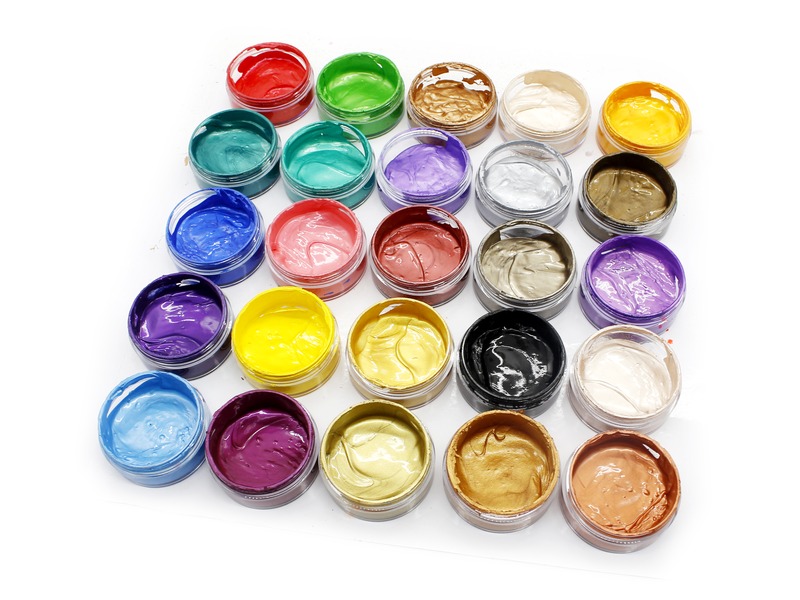
Water-based, solvent-based and matte epoxy color pastes: which carrier your system takes, how to judge the addition level, and what each looks like cured.
Numéro d'article :
Metallic Luster Paste, water based — KT-66000J series; Metallic Luster Paste, solvent based — KT-D86011J series; Epoxy Resin Matte Paste, color — KT-D6413J series; Epoxy Resin Matte Paste, near-nude matte — KT-D70601J seriesEffet de couleur :
Luster series — semi-transparent metallic, reads by reflection and shifts with viewing angle; Matte series — opaque solid color with a flat finishTaille des particules :
Not specified in the current range documentation; state your target on enquiryComposition :
Pigment already wetted out and dispersed in a carrier — water for the water-based series, solvent for the solvent-based and matte seriesMarque :
KolortekMOQ :
5 kgApplication :
Epoxy resin casting and wood-and-resin work; waterborne systems where the paste is used as supplied or thinned with waterA metallic color paste is a jar of pigment that has already been dispersed — wetted out and milled into a carrier before it reaches you. The carrier decides what you can do with it. Two jars can carry the same color name and still belong to different systems, so the carrier on the label matters more than the name on the lid.
Unscrew the lid and you find a paste, not a powder. It sits in the jar with a wet sheen across the surface, holds a peak where the scoop pulled away, and comes out on a spatula or a stick to be weighed straight into a batch.
That texture is the point. The pigment inside has already been wet out and dispersed into a carrier, so the step where you would normally run powder through a bead mill or a three-roll mill has been completed before the jar was filled. What arrives is a suspension you meter by weight and stir in.
What it is not: a concentrate you dilute to taste, or a universal tint that drops into anything. The liquid around the pigment is a specific carrier chosen for a specific resin system, and that liquid is what decides whether you can open the jar and use it, or whether it has to be blended into something else first.
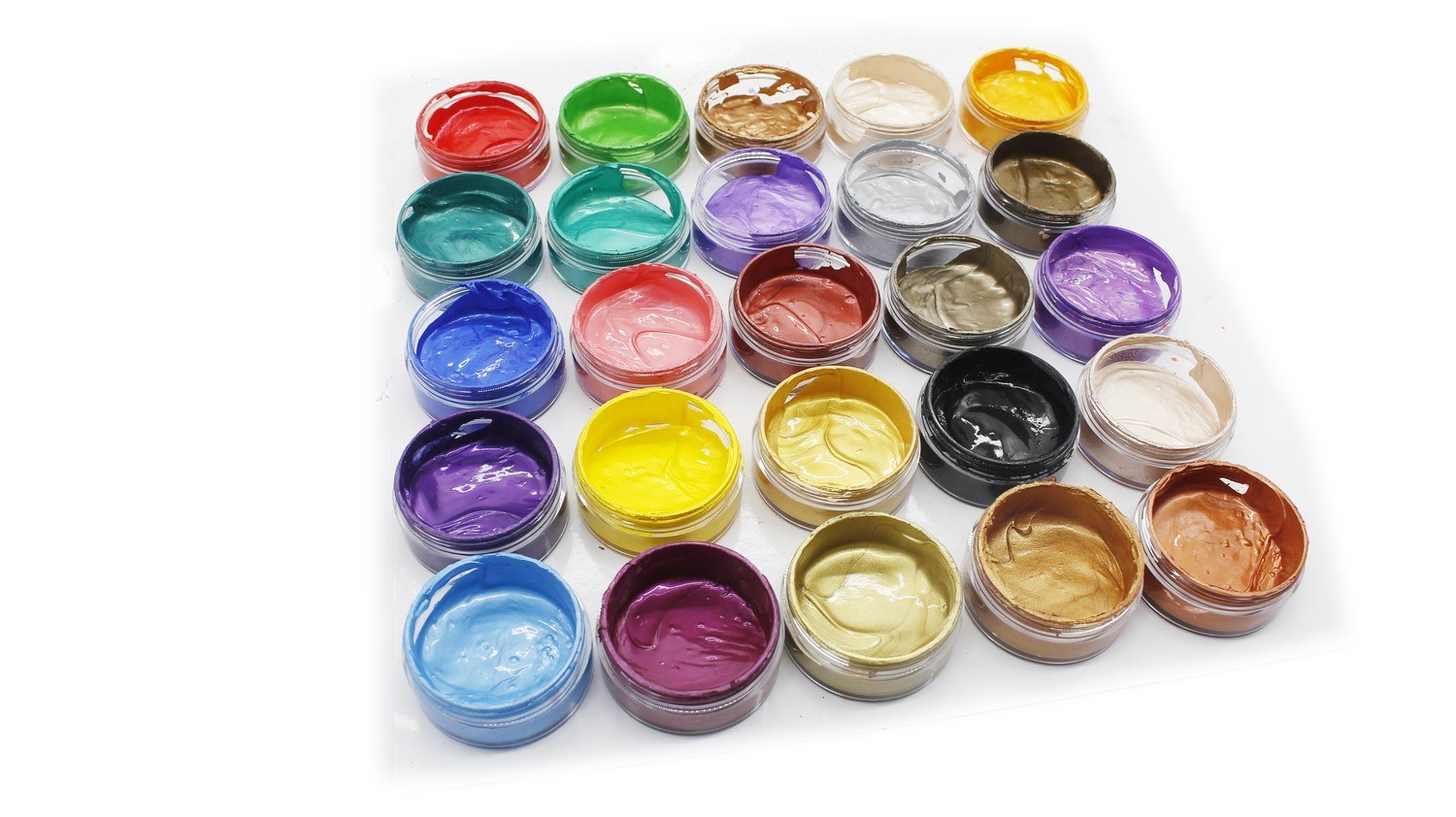
Fig. 1 — Jars opened and laid out as a set on white; paste, not powder, in every one.
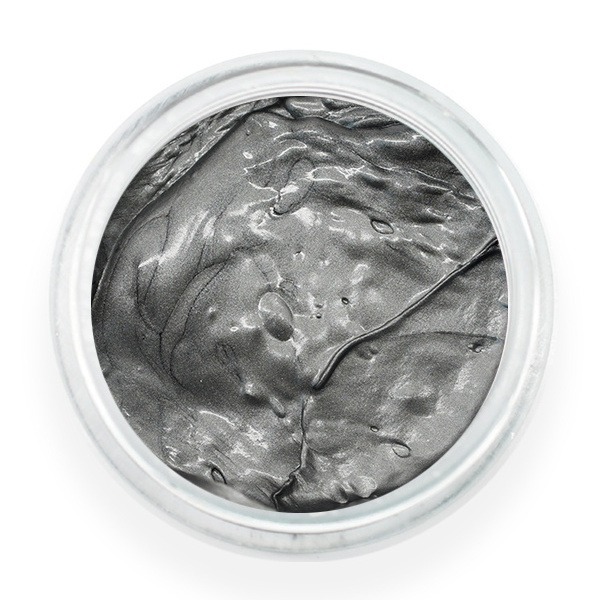
Fig. 2 — Surface of a single jar: the wet gloss and the wave left by the last scoop.
The answer depends on the carrier, and the two main groups split cleanly on exactly this point.
Water-based metallic luster grades can be used as supplied or thinned with water. You open the jar, stir, and add; dilution is optional and done with water alone, so there is no separate let-down step to plan around. If you are running a waterborne system, the jar is already the finished component.
Solvent-based grades are added into epoxy resin. They are not a stand-alone coating but an input to a resin batch — weighed in and mixed until the color is uniform through the pour. The epoxy matte grades go into the resin as well rather than over it. This means you cannot judge these by dipping a stick in the jar: the color you see wet is not the color you get until the paste is inside resin and cured.
That single difference decides a purchase more often than color does, because a jar that has to be let down is a different purchase from a jar that can go straight in. If you are pouring resin, the epoxy application listing under pigments for epoxy resin is organized by the system the paste belongs in rather than by color name.
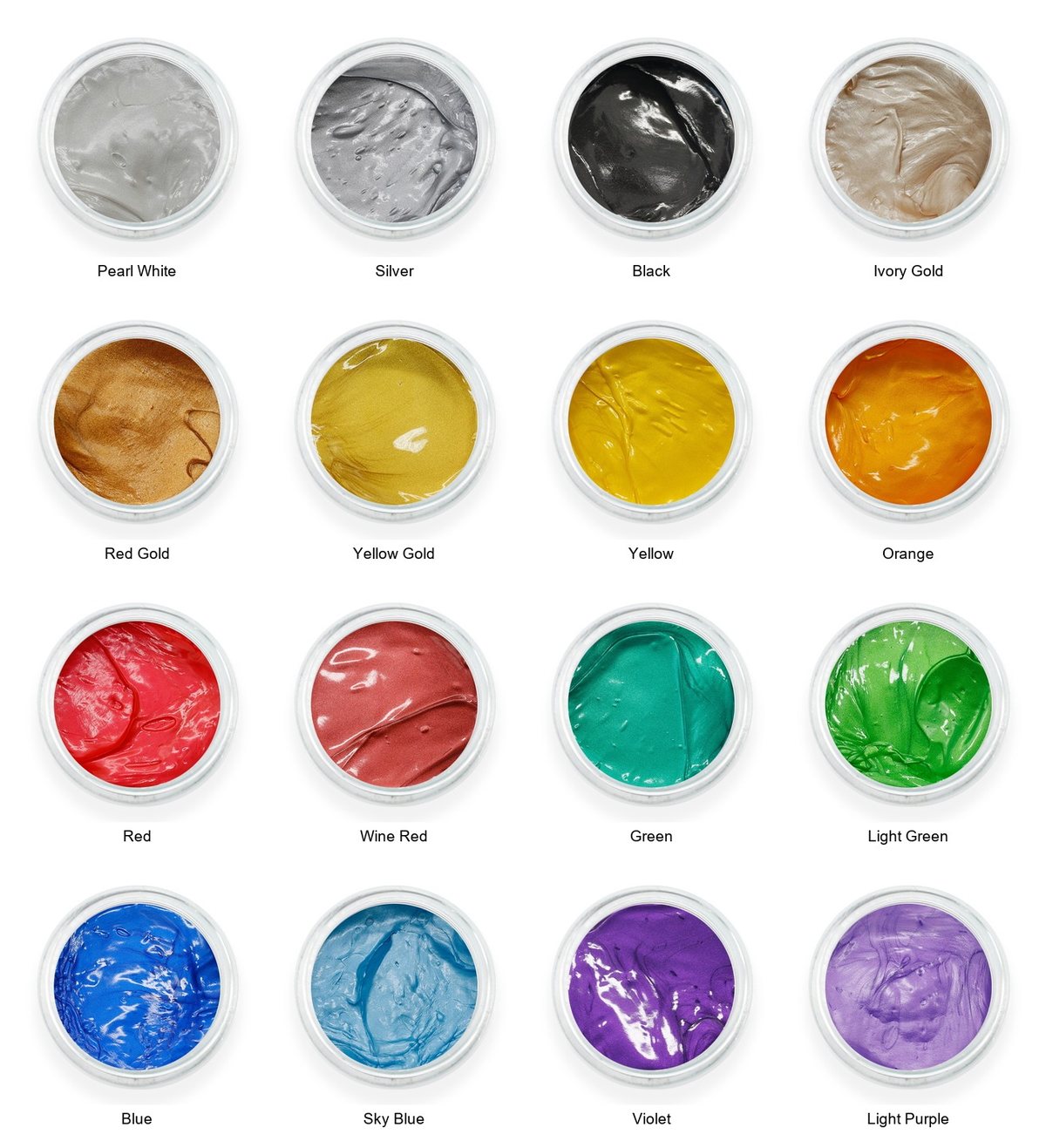
Fig. 3 — Water-based metallic luster range laid out jar by jar.
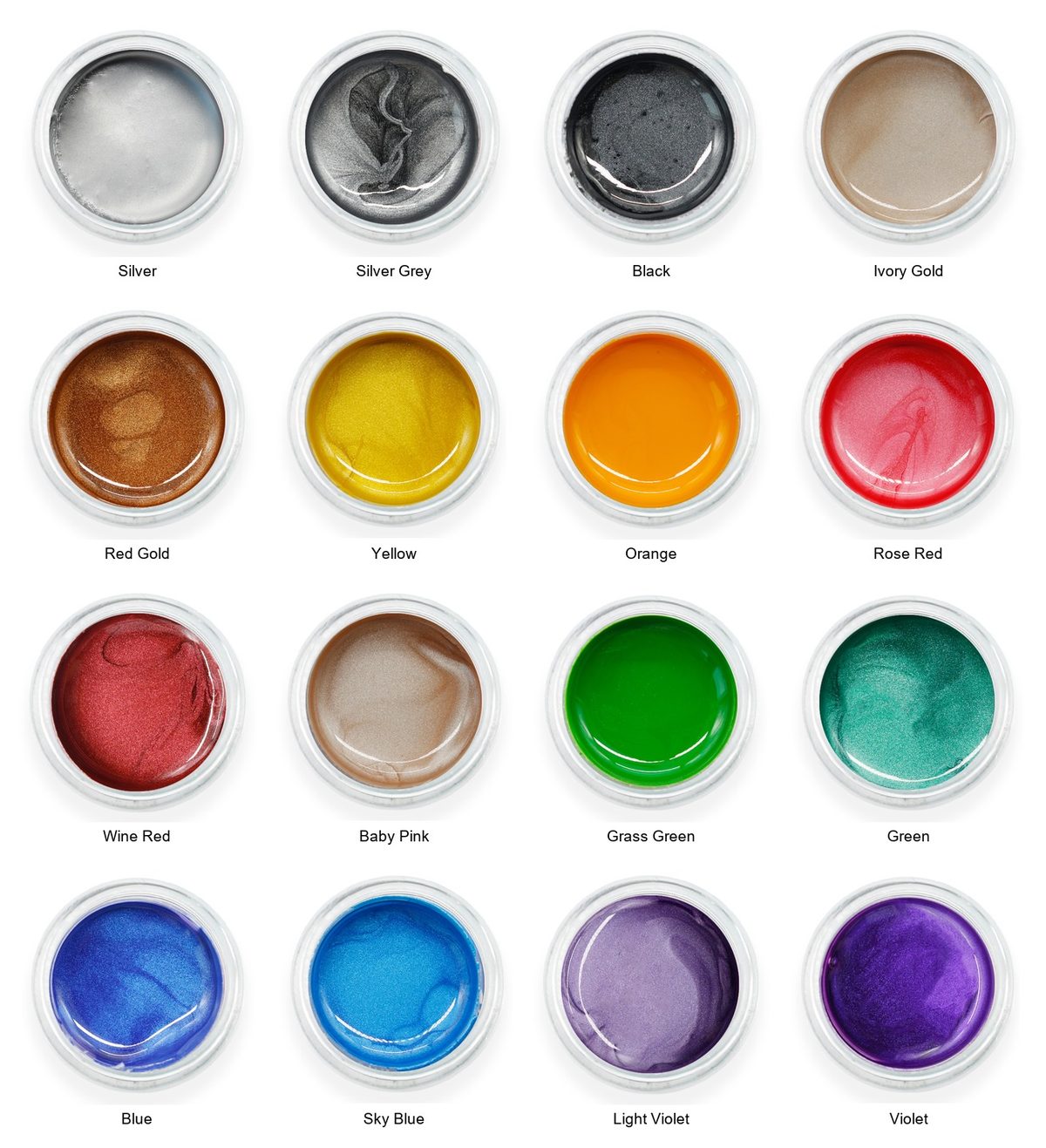
Fig. 4 — Solvent-based metallic luster range: overlapping color names, different carrier.
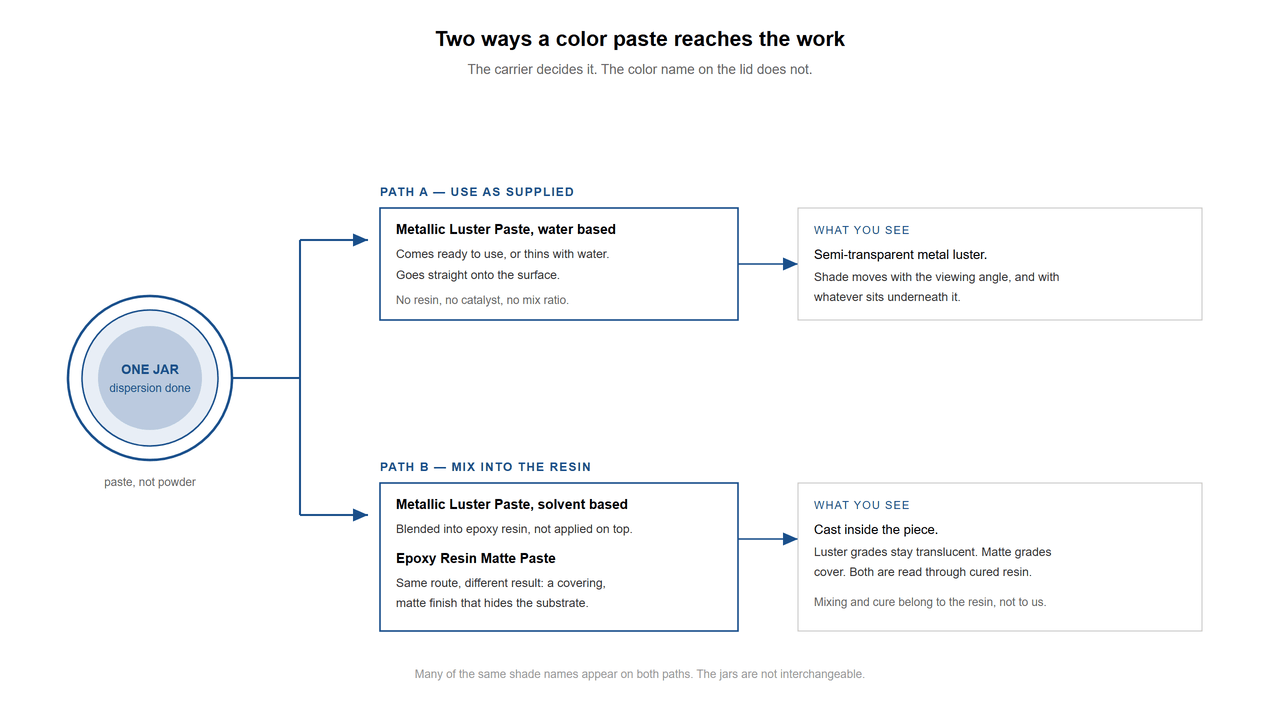
Fig. 5 — Where each carrier goes: used as supplied, or blended into the resin.
Cure changes the appearance, and the two sides finish differently.
Metallic luster grades cure semi-transparent. The effect works by reflection rather than hiding power, so the surface underneath stays visible and the color shifts as the viewing angle moves. Over a dark pour the same paste reads deeper; over a pale one it reads lighter and more open. That interaction is what you are buying, and it needs a substrate worth showing — a clear or tinted cast, a clear coat, a surface with some depth in it.
Epoxy matte grades cure as opaque solid color. They cover what is beneath them instead of interacting with it, and the finish is flat rather than reflective. The luster side depends on depth underneath; the matte side depends on consistent film thickness, because coverage is what carries the color.
The two are not interchangeable inside one application. Choosing between them is choosing what the cured surface should do. To see the luster family inside finished castings before you commit, the pearlescent pigments for epoxy resin applications page shows the same effect in cured resin.
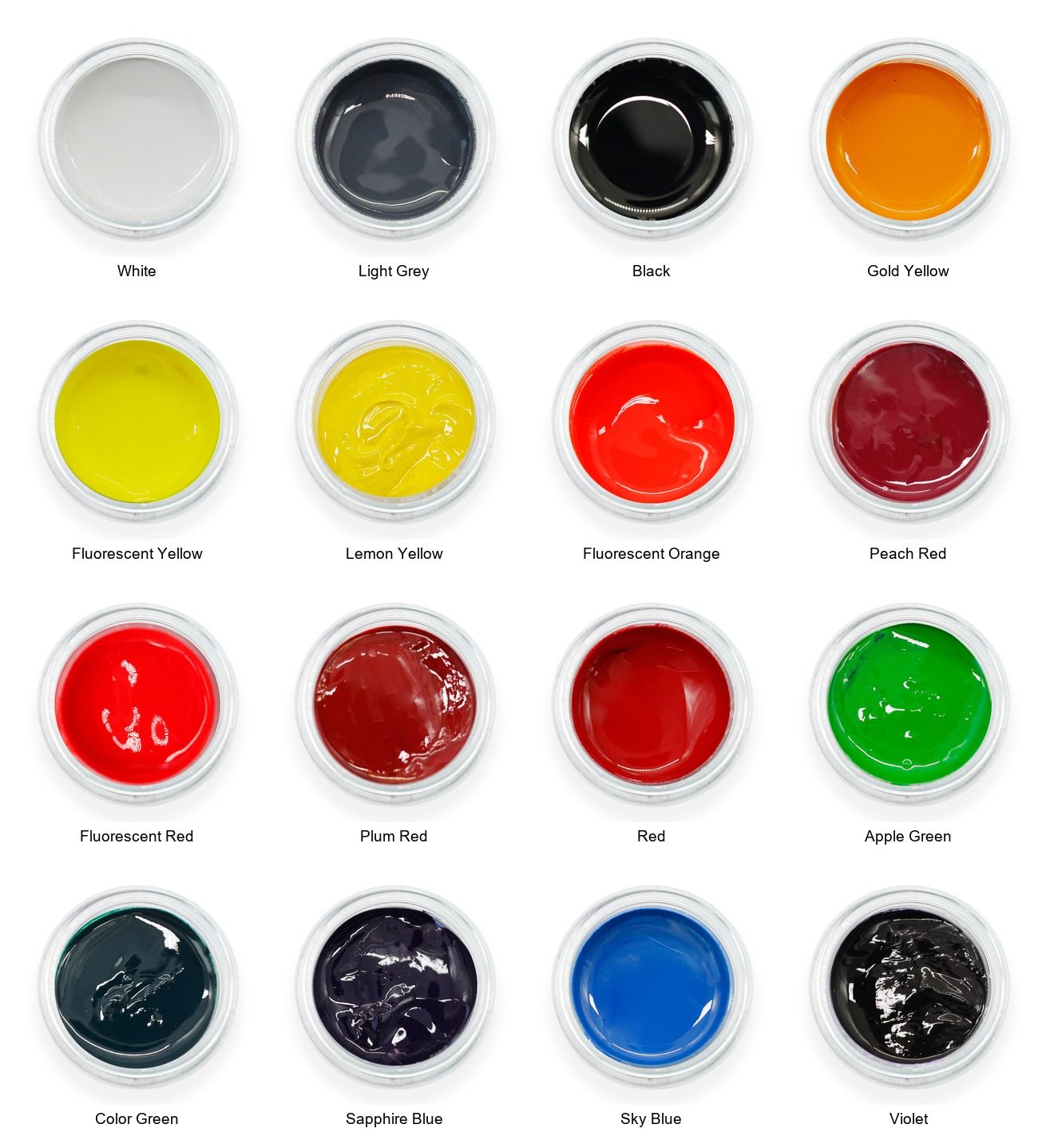
Fig. 6 — Epoxy resin matte range, jar by jar: opaque and flat.
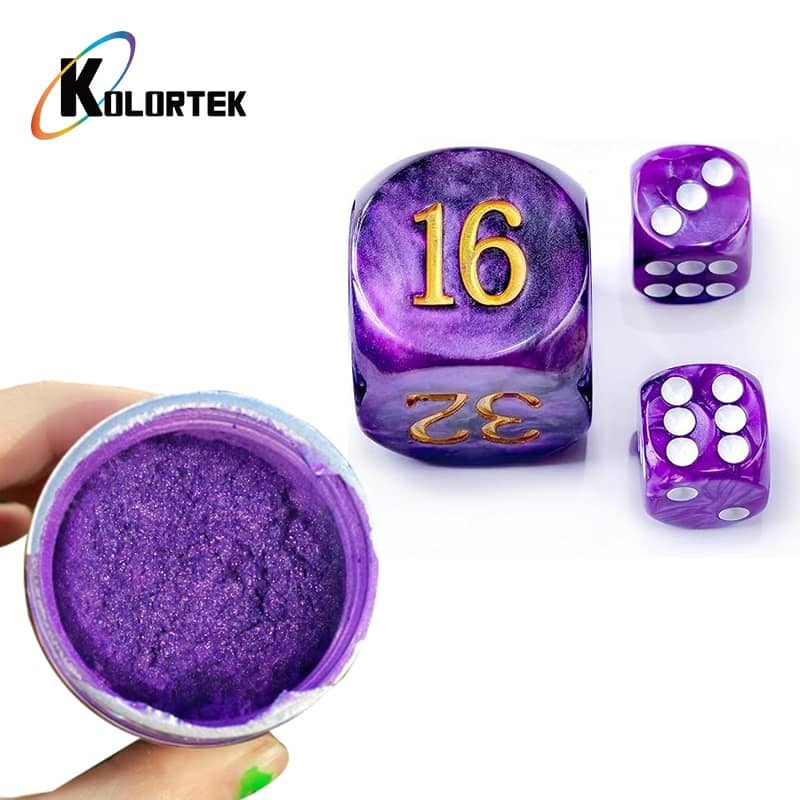
Fig. 7 — Cured purple dice beside the jar they came out of.
No addition percentage is quoted here, because the right figure depends on your resin, your film thickness and the depth of color you are aiming for. What can be given is the method.
Start small. Add a weighed portion to a small weighed batch, mix until it is uniform, and cure a sample. Judge the cured piece, not the wet mix — a wet stirred batch always looks stronger than the finished cast.
Read coverage first. If the cured sample still shows the substrate where you wanted hiding, add and repeat. If it has gone heavier than intended, you have found the ceiling for that batch and can step back on the next one.
If something goes wrong in cure — soft patches, uneven hardening, a surface that stays tacky — check the addition level and the mixing uniformity before you suspect the paste. An overloaded or poorly blended batch behaves like a resin problem, and usually is one. If you would rather control loading from the pigment end, metallic pigment color powder solutions is the alternative route, with the dispersion step back on your side.
The range separates along carrier and finish, not along color. Read down the carrier column first; the color comes second.
| Family | Carrier | How it is used |
|---|---|---|
| Metallic Luster Paste, water based | Water | Used as supplied, or thinned with water. Semi-transparent metallic effect in waterborne systems. |
| Metallic Luster Paste, solvent based | Solvent | Added into epoxy resin. Semi-transparent metallic effect, mixed into the batch. |
| Epoxy Resin Matte Paste, color | Solvent | Added into epoxy resin. Opaque solid color, matte finish. |
| Epoxy Resin Matte Paste, near-nude matte | Solvent | Added into epoxy resin. Opaque near-nude tone, matte finish. |
The metallic luster side is a single effect with two carriers, listed under the metal luster series; the broader effect category sits under pearlescent pigments if you want to compare a paste against a powder of the same character.
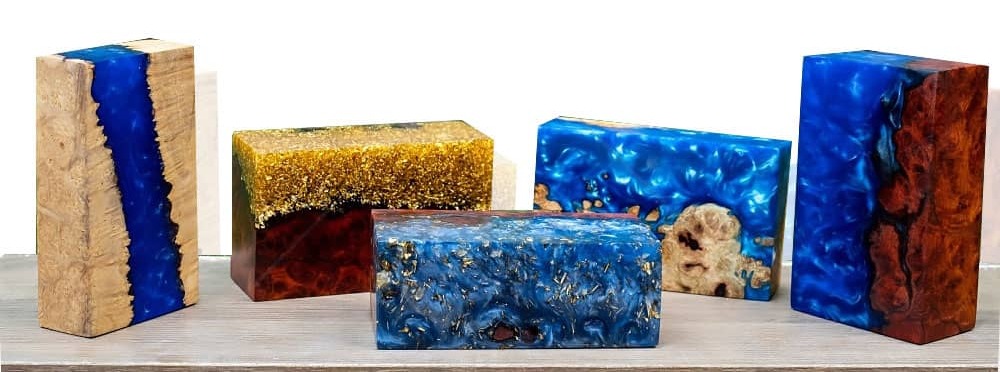
Fig. 8 — Wood-and-resin pieces cast with paste from the range.
Minimum order is 5 kg, so a first purchase is a working quantity rather than a single jar. We are ISO 9001:2015 certified. Halal, Kosher, US FDA registration, SGS, RoHS and REACH documentation is provided on request; ask for what your market needs when you enquire.
A custom sample pack is available for evaluation if you want to test the carrier against your own resin before committing to the minimum. The full selection, with carriers and color names side by side, is in the catalog: Color Pastes (No. 39).
Can water-based paste go into epoxy? No. Water-based grades are built for waterborne systems and are used as supplied or thinned with water. For epoxy, take the solvent-based or the epoxy matte grade.
Can the two carriers be mixed? They are not blended together. Each jar belongs to the system its carrier was chosen for, and crossing them defeats the reason the carrier is specified.
Will it affect cure? Cure problems usually trace back to addition level or uneven mixing rather than the paste itself. Trial on your own batch, and check loading and mixing before changing anything else.
Tell us the resin system you are pouring and the finish you want — metallic through-depth or opaque matte — and we will point you to the carrier that fits it. Samples available for evaluation on request.
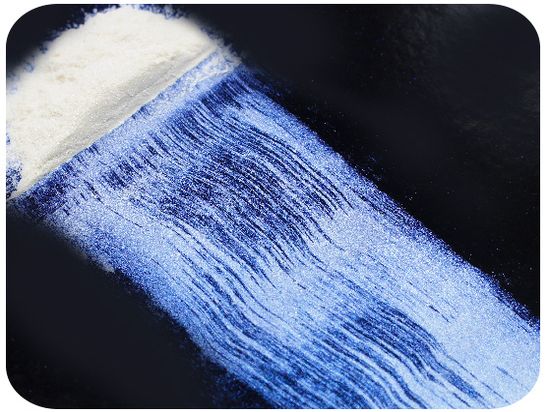
Le pigment KT-T60-22-WR Rainbow Violet XiallicSparks est notre équivalent direct du Xirallic T60-22, un pigment violet à base d'oxyde d'aluminium (Al₂O₃) formulé sur un substrat de paillettes d'oxyde d'aluminium plutôt que de mica. Avec un indice de réfraction de 1,76 et une granulométrie de 6 à 30 µm, il produit l'éclat cristallin net et facetté caractéristique des peintures automobiles haut de gamme. Contrairement aux pigments à base de mica qui offrent un éclat diffus et doux, ce pigment produit des reflets précis et brillants, d'une saturation et d'une pureté exceptionnelles, pour un effet violet arc-en-ciel.
EN SAVOIR PLUS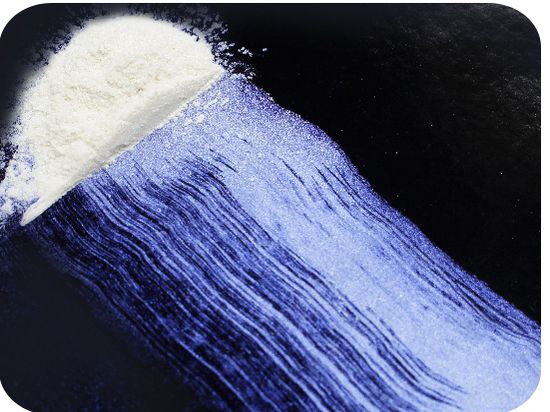
KT-T60-23-WR est notre produit à base d'alumine.remplacement xirallic bleu galaxie Pigment conçu comme une alternative directe au Merck Xirallic T60-23. Construit sur un substrat cristallin Al₂O₃ à indice de réfraction élevé (RI 1,76) avec une gamme de particules de 6 à 30 μm, il offre un éclat bleu facetté et cristallin dans les systèmes de peinture de base automobile — le genre de profondeur et de brillance que les pigments à base de mica ne peuvent structurellement égaler.
EN SAVOIR PLUS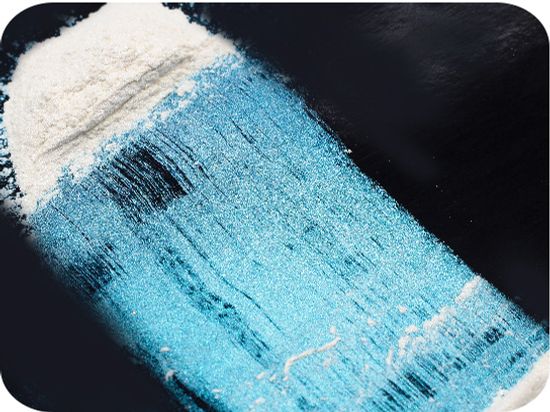
Le KT-T60-25-WR est un pigment à effet cristallin à base d'alumine (Al₂O₃) de notre gamme XiallicSparks. Il produit un éclat vert arc-en-ciel intense, avec un aspect facetté et une brillance exceptionnelle, caractéristiques des finitions automobiles haut de gamme. Avec une granulométrie de 6 à 30 µm et un indice de réfraction du substrat Al₂O₃ de 1,76 (nettement supérieur à celui du mica standard), ce pigment vert arc-en-ciel à base d'Al₂O₃ offre une saturation et une clarté exceptionnelles dans les systèmes bicouches (base/vernis), à un prix direct usine.
EN SAVOIR PLUS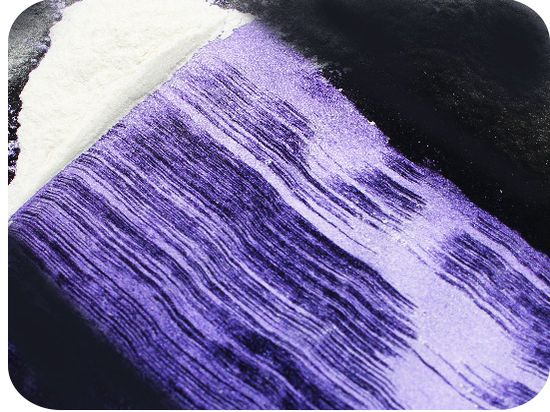
Le KT-T60-26-WR Rainbow Purple est un pigment à effet cristallin à base d'alumine de notre gamme XiallicSparks. Il produit un éclat violet arc-en-ciel intense dans les systèmes de peinture automobile (base-vernis). Formulé à partir d'un substrat de paillettes d'Al₂O₃ (et non de mica), il offre une saturation plus élevée, des reflets plus nets et une meilleure orientation des paillettes que les pigments nacrés classiques. Avec une granulométrie de 6 à 30 µm et un D50 de 9 à 11 µm, il est spécialement conçu pour les applications haut de gamme de première monte et de retouche automobile, où l'éclat violet cristallin est recherché.
EN SAVOIR PLUS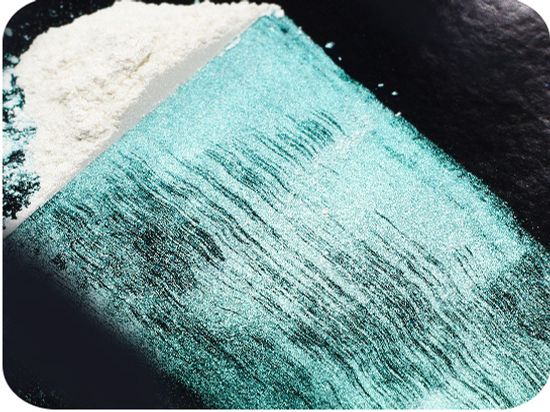
XiallicSparks est la gamme de pigments à effet oxyde d'aluminium de Kolortek, disponible en gros, conçue comme une alternative directe au Merck Xirallic® pour les applications de revêtements automobiles d'origine et industriels haut de gamme. À base de paillettes d'Al₂O₃ plutôt que de mica, cette gamme offre l'éclat facetté et cristallin caractéristique des finitions automobiles haut de gamme, à un prix direct usine généralement 20 à 40 % inférieur aux équivalents Merck pour des performances comparables. Si vous recherchez une alternative au Xirallic en gros, cette gamme de produits est à considérer.
EN SAVOIR PLUS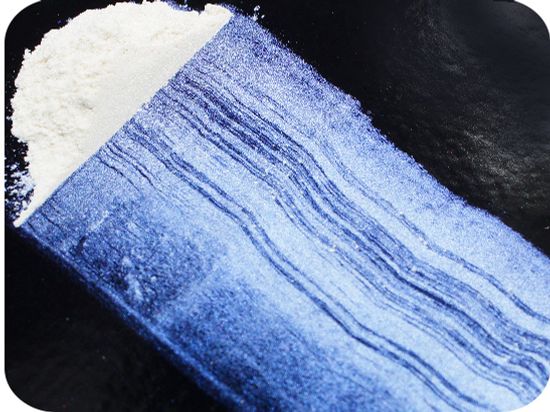
Si vous recherchez unÉquivalent Xirallic directement du fabricant Pour obtenir le même effet scintillant à facettes que celui conféré par Merck Xirallic à ses revêtements, la gamme XiallicSparks de Kolortek (références KT-T60 et KT-F60) offre un substrat cristallin d'oxyde d'aluminium 20 à 40 % moins cher que les produits de marque équivalents. Disponible en onze qualités, allant du Galaxy Silver au Flame Copper, avec des granulométries de 6 à 30 µm et une livraison directe depuis notre usine en Chine, cette gamme constitue une alternative idéale pour les formulateurs de revêtements automobiles recherchant la performance sans le prix exorbitant de Merck.
EN SAVOIR PLUS
 Français
 English
 Deutsch
 Русский
 Español
 Português